For most businesses, the office doesn’t exist to simply to house desks. It has become a tool for culture, collaboration, brand perception, staff retention and operational performance. That shift has made one property decision particularly important for senior leadership teams. Should we refurbish the office we already have, or should we relocate to a new one?
The “Stay vs Go” question is one that often surfaces at moments of pressure. A lease event is approaching. Hybrid working has exposed weaknesses in the current layout. Staff expectations have changed. Meeting rooms are constantly overbooked. The office no longer reflects the quality of the business or the experience the leadership team wants to create. In some cases, the building itself has started to feel like a constraint rather than an asset.
At Constructive Space, we see this decision as far more than a property exercise. Choosing between an office refurbishment or office relocation is really about deciding what kind of workplace will best support the next stage of your business. Done well, it can strengthen performance, improve staff experience and protect long-term value. Done poorly, it can lock an organisation into unnecessary cost, compromise and disruption. That is why the most effective approach is not to start with square footage or headline cost, but with workplace strategy.
Why office refurbishment vs relocation is now a strategic business decision
The London office market has changed significantly. Businesses are under greater pressure to justify the role of their workplace, ensure their office portfolio is performing properly and create environments that support both flexibility and business identity. This means office refurbishment and office relocation decisions can no longer be treated as purely operational or reactive.
In practice, the office now must work harder. It needs to:
- Support collaboration without sacrificing focus.
- Help attract and retain talent.
- Create the right impression for clients, investors and visitors.
- Respond to compliance requirements, accessibility responsibilities and environmental expectations.
- Support how the business actually operates today rather than how it operated five years ago.
That is why we believe this decision belongs in the wider conversation about workplace strategy. Whether a business chooses to stay and invest in its existing office or move into a new one, the aim should be the same. The workplace should help the organisation perform better.

Start with workplace strategy, not the building
The strongest office decisions begin with clarity on what the workplace needs to achieve. Before comparing premises, programmes or budgets, we need to define the role of the office itself:
- Is it primarily a collaboration hub?
- Is it a client-facing headquarters?
- Does it need to support confidential meetings, concentrated individual work, leadership visibility or a specific operational function?
- Is growth expected, or is the priority to make existing space work harder and more efficiently?
These questions matter because many businesses are still occupying offices designed for an outdated way of working. Hybrid working has often reduced demand for rows of fixed desks while increasing demand for high-quality meeting rooms, touchdown areas, project spaces and shared settings that bring people together more effectively. In those cases, the issue is not always that the business needs a new office. It may simply need a better one.
This is where early workplace planning adds real value. By assessing utilisation, team behaviours, business priorities and future headcount, we can establish whether the existing office has the potential to evolve through a well-considered office design and office fit-out strategy, or whether relocation would provide a stronger long-term platform.
When office refurbishment is the right choice
Office refurbishment is often the best option when the fundamentals of the current building are still working in the business’s favour. The location may be right. The transport links may be convenient for staff and clients. The surrounding amenities may support recruitment and staff wellbeing. The lease position may still offer value. In these circumstances, leaving the building altogether may solve the wrong problem.
A well-planned office refurbishment can transform how a space functions without requiring the business to give up the advantages of its current address. It can improve circulation, rebalance the mix of work settings, modernise the look and feel of the office, strengthen the arrival experience and create a much better day-to-day environment for staff. It can also provide an opportunity to improve technology integration, storage strategy, acoustic control and staff wellbeing features in a way that aligns the office with current expectations.
For many London occupiers, this route makes strong commercial sense. If the office is already in the right place, close to transport links, clients or a key talent catchment, relocating purely because the layout no longer works can introduce unnecessary cost and disruption. In many cases, the better solution is to rethink the space through a more intelligent office refurbishment and fit-out approach that responds to how the business works now.
Refurbishment can also be attractive where business continuity is a major concern. With careful planning and sequencing, it is often possible to minimise disruption and retain a greater degree of operational control than a full move would allow. That makes it a particularly valuable option for organisations that need change, but do not necessarily need a new postcode.
Bringing design, project management, construction delivery and furniture installation together under one contract can help streamline both refurbishment and relocation projects and improve programme control.

When office relocation makes more sense
There are, of course, situations where office relocation is the more strategic move. This tends to happen when the current building imposes hard limits that design alone cannot solve. The floorplate may be inefficient. The building services may be outdated. Landlord constraints may restrict the scale of intervention possible. The office may lack the flexibility, image or infrastructure the business now needs.
Relocation can also make sense when there is a natural lease event or when lease-end liabilities and dilapidations exposure are likely to be significant. A break clause, lease expiry or major dilapidations exposure can create the right moment to assess whether the existing office still justifies further investment. Where it does not, moving can offer a cleaner and more future-focused solution.
A new office can unlock opportunities that refurbishment may never fully achieve. It may allow a business to rightsize its footprint more effectively, secure stronger environmental performance, gain access to better amenities or position itself in a location that is more aligned with growth, recruitment and brand perception. In some cases, the real value of relocation lies in removing long-standing compromises. Better natural light, stronger end-of-trip facilities, more efficient building cores, improved ventilation and a more appropriate address can all have a material impact on how the workplace performs.
This is why we do not view office relocation as a last resort. It is often the right answer when the business has outgrown the building, not just the fit-out.
The hidden costs behind both options
One of the biggest mistakes businesses make is comparing the visible cost of one option with the incomplete cost of the other. Relocation often appears more expensive at first because the costs are easier to identify. There is the new lease, legal input, fit-out works, furniture, move management, technology migration and the wider logistics of transition.
Refurbishment can appear more straightforward, but that impression can be misleading. Existing services may need more upgrading than expected. Unknown site conditions can affect scope. Working in an occupied building may introduce programme complexity. Landlord approvals and building constraints can create delays or compromise the design outcome. These are not reasons to avoid refurbishment, but they are reasons to assess it properly.
From our perspective, the most useful comparison is not simply capital cost. It is whole-business value. A cheaper refurbishment may prove poor value if it leaves the organisation in an office that still undermines performance. A more costly relocation may create stronger long-term returns if it gives the business a better operating platform, eliminates wasted space and improves staff experience. This is why decisions about office fit-out and relocation should be judged on operational impact, future flexibility and overall risk, not just headline spend.

Compliance should influence the decision from the outset
Compliance is another critical part of the refurbishment versus relocation discussion, particularly for businesses operating in London’s more complex commercial property environment. The workplace has to do more than look impressive. It must also support statutory compliance, operational safety and inclusive access.
Whether a business stays or moves, any office project needs to consider Building Regulations, fire safety, accessibility and the practical responsibilities that sit behind occupation. If the existing office requires major intervention to support modern standards, that may affect the viability of refurbishment. Equally, a prospective relocation may look attractive until the scope of works needed to make the space compliant and fully functional becomes clear.
We believe compliance should never be treated as a technical afterthought. It should shape the decision itself. Early coordination between property, design, compliance and delivery teams leads to better choices, greater programme certainty and stronger long-term workplace performance. It also helps ensure that the finished office is not only attractive and effective, but resilient and responsible.
Accessibility should also be part of the brief from the beginning, not a late-stage consideration. The practical implications of the Equality Act 2010 guidance can directly influence how viable an existing office is and what level of intervention a new space may require.
Sustainability and long-term workplace performance
Sustainability has also become a central part of the office refurbishment vs relocation conversation. Businesses are under increasing pressure to make responsible property decisions, reduce environmental impact and occupy spaces that support long-term performance. For some organisations, refurbishing and upgrading an existing office will be the more sustainable route. For others, relocating to a better-performing building may offer a stronger long-term solution.
There is no universal answer. The right choice depends on the condition of the existing building, the scale of improvement required and the quality of the relocation options available. What matters is that environmental performance is considered alongside business performance rather than separately from it.
At Constructive Space, we see sustainability as part of intelligent workplace strategy. It should be integrated into the brief from the beginning, alongside staff wellbeing, operational needs, compliance responsibilities and the wider business case for change. That is where a thoughtful workplace guidance process becomes especially valuable, because it allows leadership teams to assess their options through a long-term lens rather than a purely short-term one.
It is also important to consider minimum energy efficiency standards for non-domestic rented property, particularly where lease events, upgrades or building performance are part of the wider property discussion.

How to assess office refurbishment vs relocation properly
The most reliable way to make the right decision is to test both routes against the same strategic criteria. That means first defining what the office needs to achieve, and then assessing each option against that brief with honesty and rigour.
We recommend looking at how each route performs in terms of staff experience, operational continuity, flexibility, client impact, compliance, sustainability and long-term value. It is also important to review the technical limitations of the current office, the lease position, likely property obligations and the risks attached to both staying and moving. Once this process is done properly, the right direction is often clearer than many teams expect.
This is where external insight can make a real difference. An experienced partner brings objectivity to the decision and helps ensure the discussion does not become dominated by assumptions, internal politics or headline cost alone. Through a combination of workplace guidance, design thinking and delivery insight, we help clients understand not only what is possible, but what is genuinely right for their business.
You can explore our broader services to see how we support relocation, refurbishment and workplace consultancy as part of one joined-up approach.
Why timing often determines the quality of the outcome
Timing has a direct impact on the success of both office refurbishment and office relocation projects. Businesses that leave the decision too late often lose negotiating leverage, reduce their choice of options and make decisions under unnecessary time pressure. That tends to lead to compromise.
The strongest outcomes usually come when businesses start evaluating their options early. Early planning allows time to test the market, assess the existing office properly, align key stakeholders and develop a strategy based on business priorities rather than lease deadlines. It also creates more room for design thinking, better programme planning and more informed commercial decision-making.
In our experience, timing is often the difference between a workplace project that feels deliberate and one that feels reactive. Whether the answer is refurbishment or relocation, starting early almost always results in a better-quality decision.
For businesses reviewing their footprint, our insights on how to rightsize and optimise your office space and strategic office retrofitting are useful companion reads.
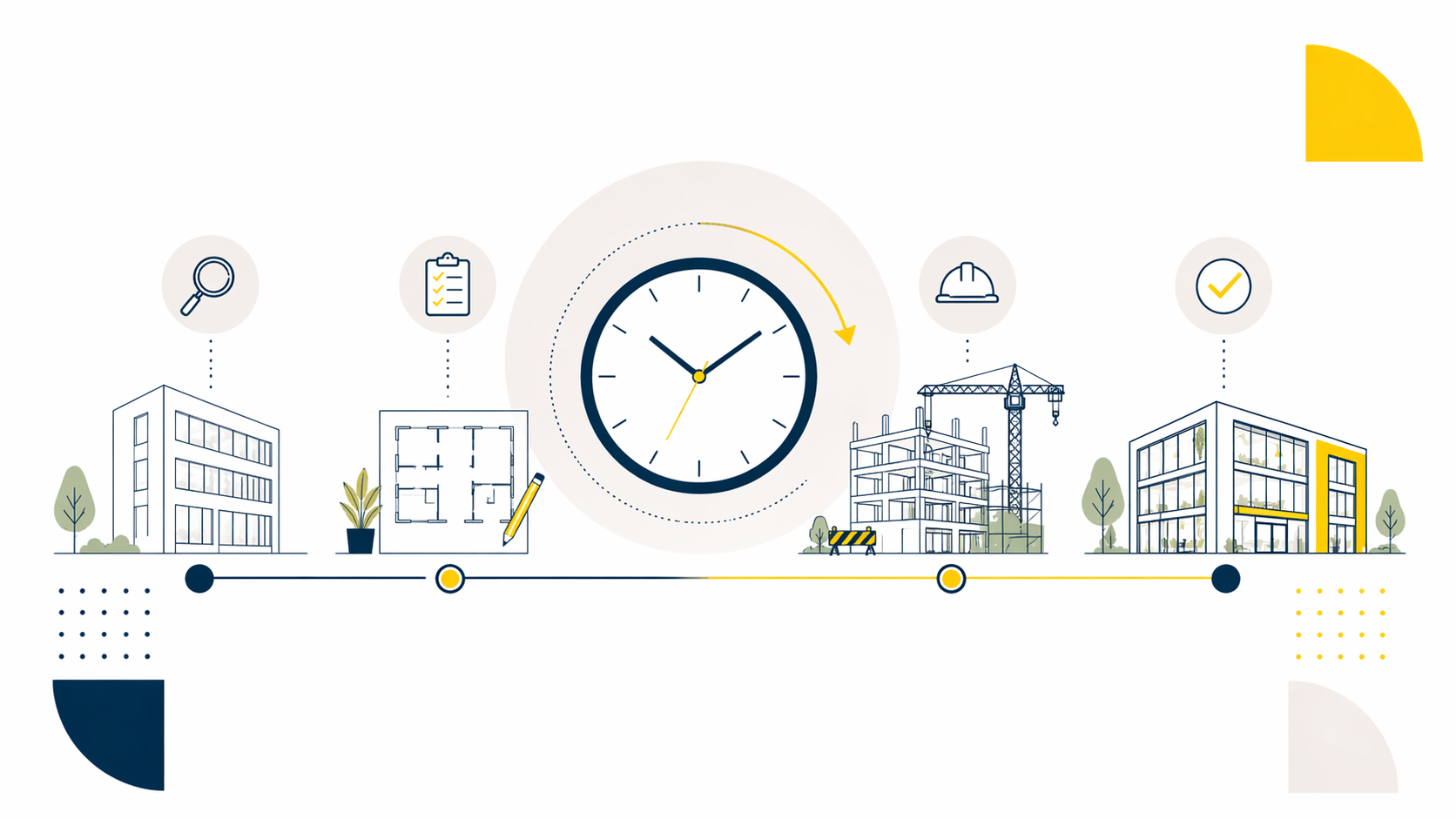
Making the right office decision for the future of your business
Ultimately, the choice between office refurbishment and relocation is not about changing space for the sake of it. It is about creating the right environment for the next stage of your business. The best choice is the one that supports your people, reflects your brand, meets your operational needs and gives you the strongest platform for future performance.
For some businesses, that means staying put and transforming an existing office through smart design and a well-managed office refurbishment project. For others, it means identifying a new building that better supports growth, flexibility and long-term value. Both routes can succeed when they are driven by clear objectives and evaluated through the right strategic lens.
At Constructive Space, we help businesses make these decisions with greater clarity by connecting workplace strategy, property thinking and delivery experience. Whether you are questioning the long-term value of your current office or actively exploring a move, the key is to make the decision early, assess both options properly and choose the route that supports the business you are becoming, not just the one you have been.
Need help?
If you are weighing up office refurbishment vs relocation in London, the best place to start is with a clear assessment of what your workplace needs to deliver. Our team helps businesses evaluate their options, reduce risk and create offices that support performance, culture and long-term value. Visit our Contact us page to start the conversation.